Seven systems, built to be opened.
These are working product demonstrations rather than screenshots or case studies. Each one runs in the browser, holds its state, and can be worked through the way the real thing would be. They show what we design and engineer.
What these are, and what they are not
Every name, company, figure, message and event in these demonstrations is invented. No demonstration contains, is derived from, or connects to any customer system or customer data. They are not commissioned client systems and none of them is in production use. They exist so you can judge our engineering by using it, rather than by reading a claim about it.
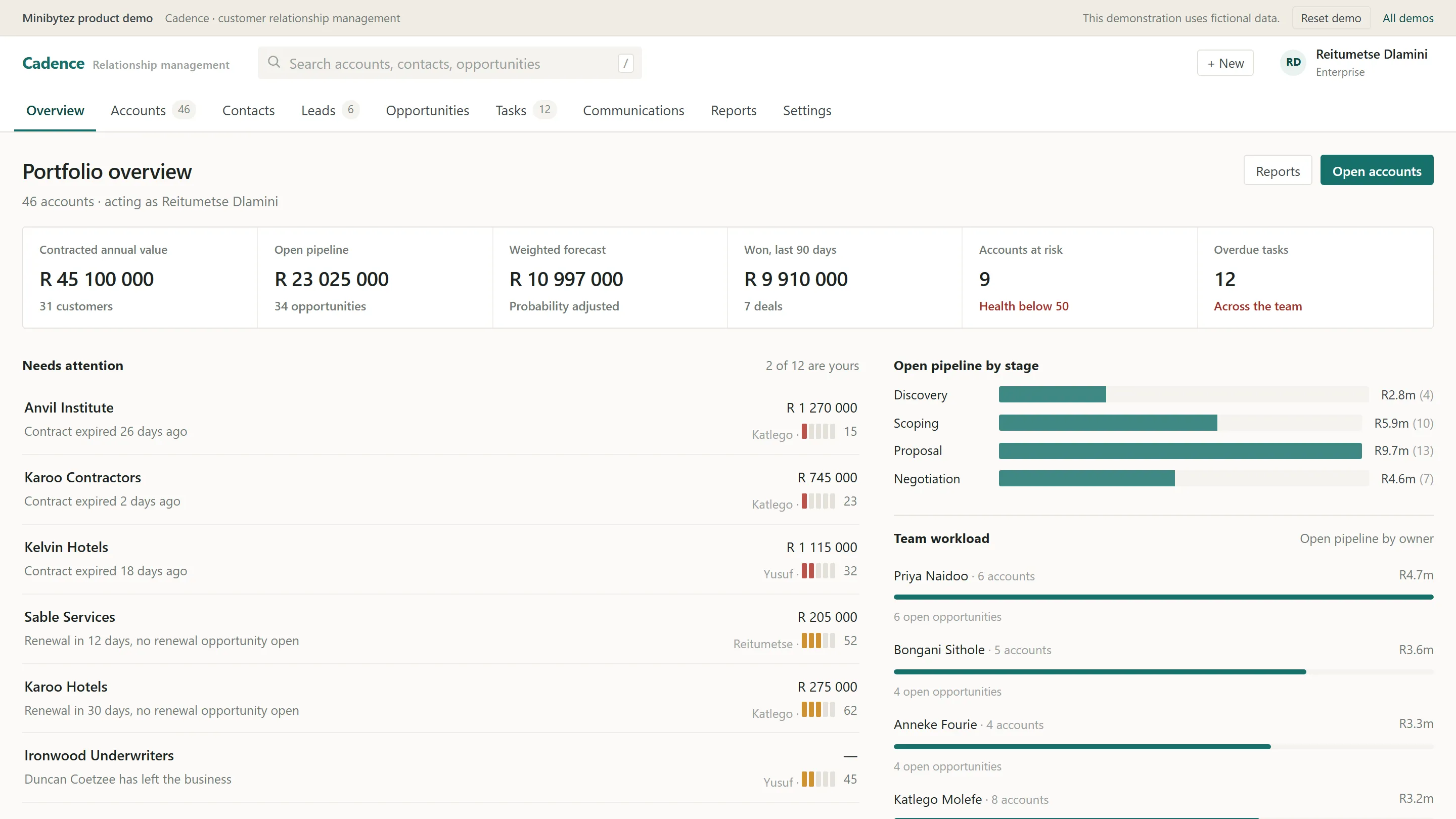
Customer relationship management
Cadence
Most CRMs store contacts well and relationships badly. A company that trades as four entities under one parent appears as four unrelated customers, so nobody can see what the relationship is actually worth.
- A customer 360 that resolves group structure, not just individual accounts
- Opportunities, activity history and named ownership on one record
- Working list views, filters and saved segments across the portfolio
- Reporting that drills back through to the underlying records
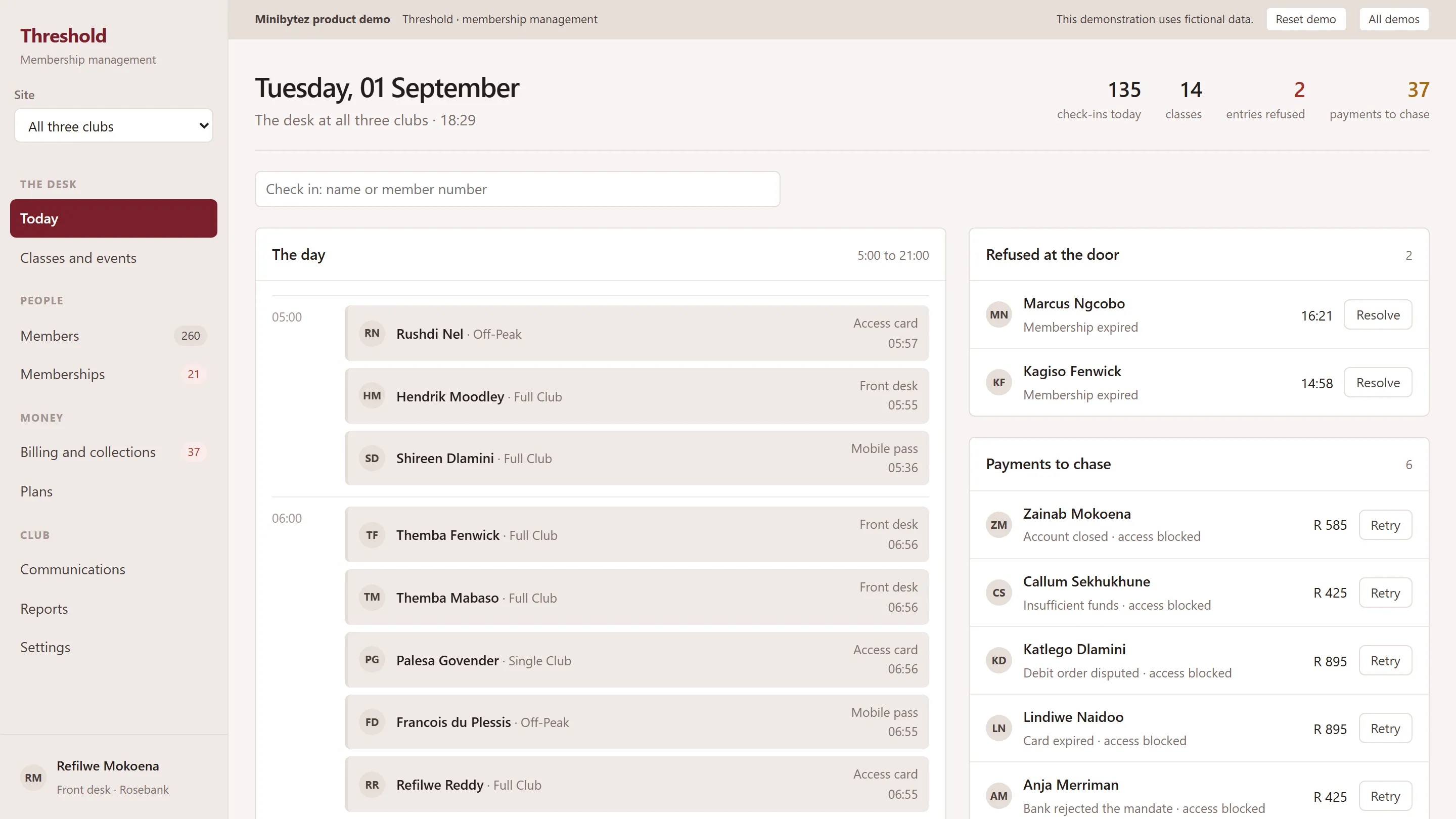
Membership and attendance
Threshold
Membership businesses lose money in the gap between a failed payment and somebody noticing. The front desk needs the answer at the counter, in seconds, while the member is standing there.
- A day view built for the counter: arrivals, bookings and exceptions first
- Member profiles carrying plan, billing state and attendance together
- Class rosters and capacity, with the booking rules applied
- A renewals and dunning queue that surfaces failed payments as work
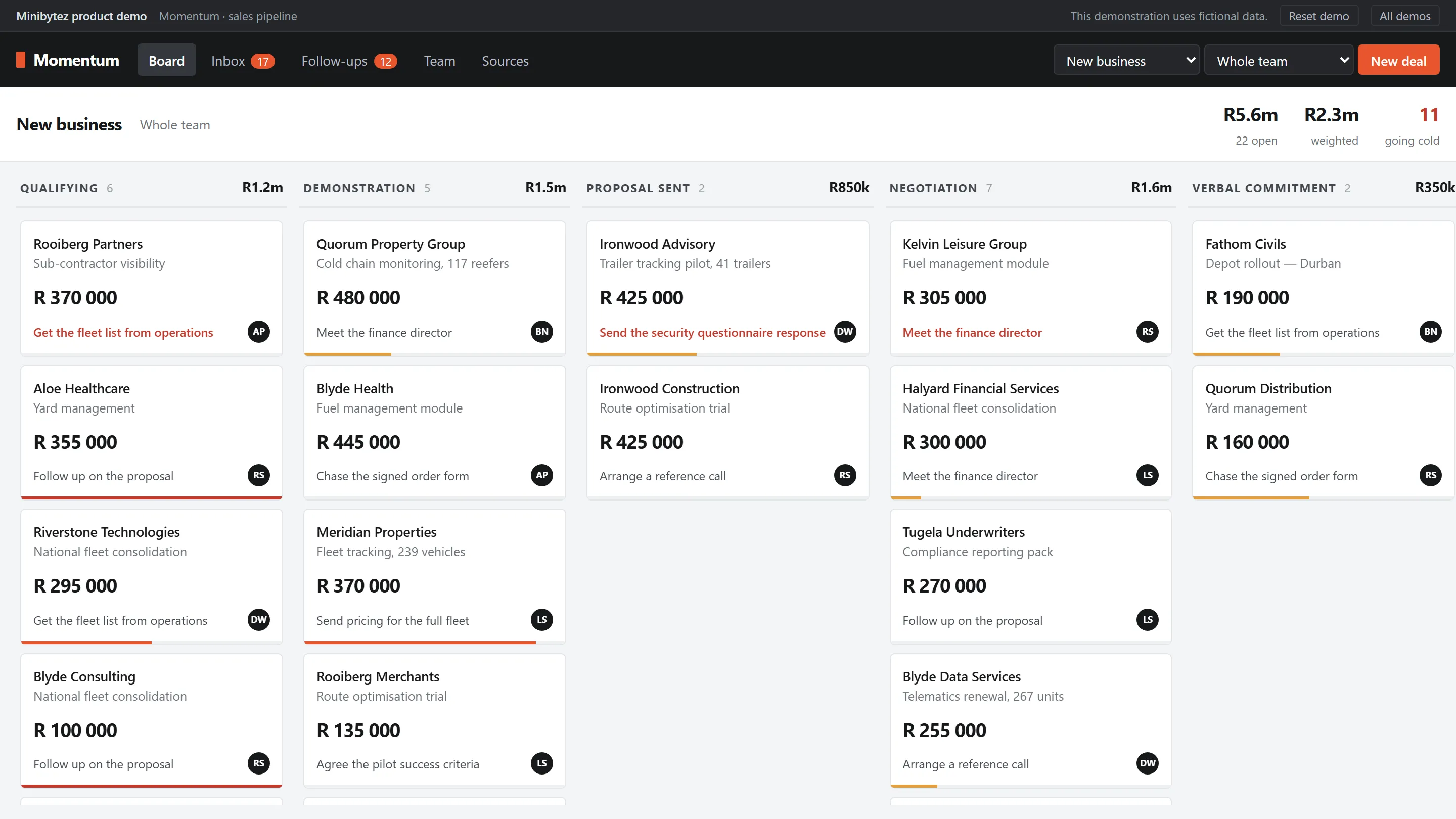
Sales pipeline and lead management
Momentum
A pipeline that only records stage tells you where deals are, not which ones are quietly dying. Time since the last real contact is usually the more honest number.
- A pipeline board where deals move by drag and drop and the view keeps up
- An idle-decay signal that ages every deal against its last activity
- A lead inbox with routing, so new demand lands with a named owner
- Capacity per representative, so the routing is not just a round robin
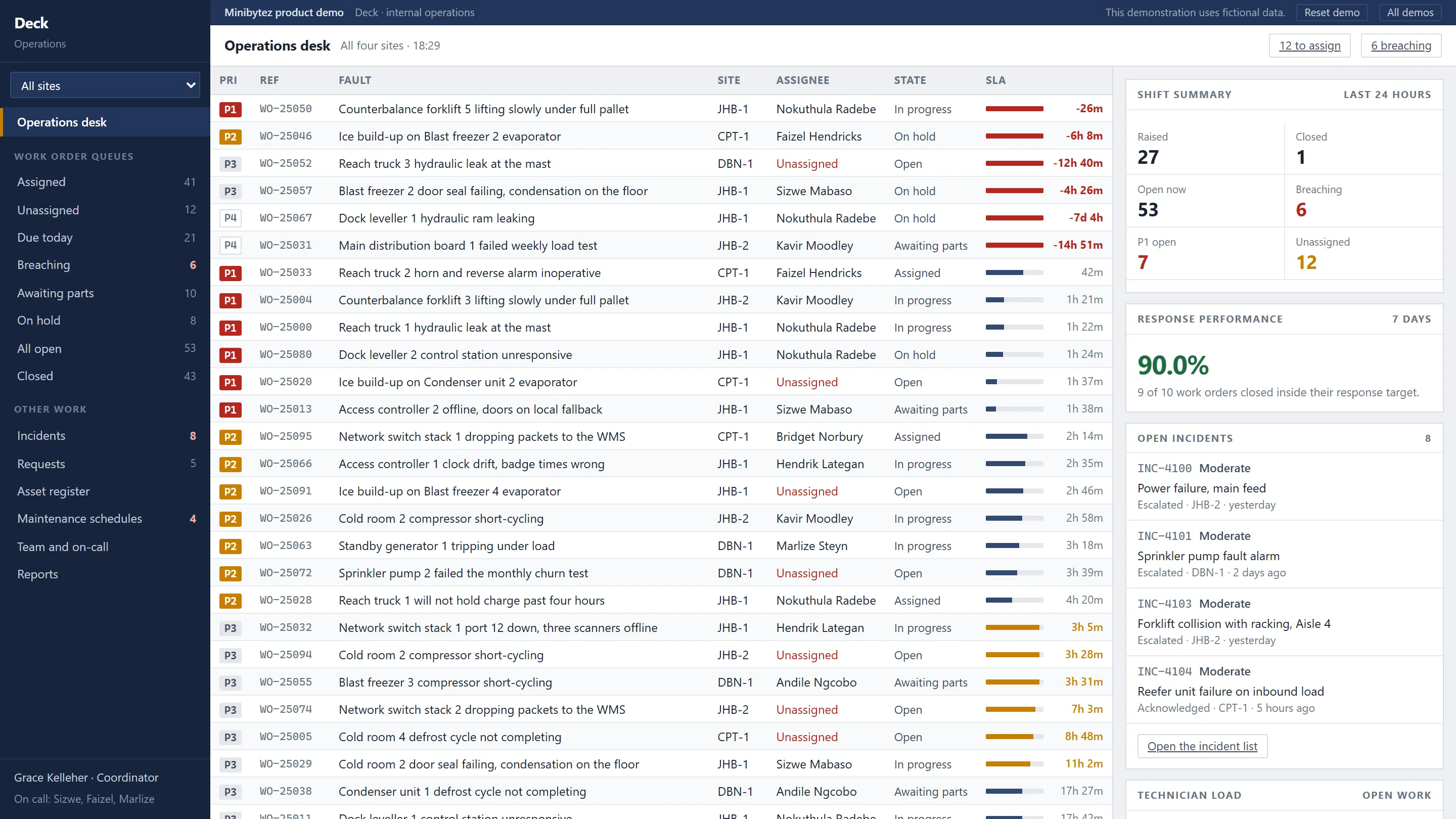
Internal operations
Deck
Operations teams do not browse, they triage. If clearing a queue takes a mouse and four clicks per item, the tool is the bottleneck rather than the work.
- Work order queues with SLA countdowns running against each item
- Keyboard-driven triage: assign, escalate and resolve without the mouse
- Incidents and approvals routed to the person who can actually decide
- Asset records attached to the work that happens against them
Customer communications
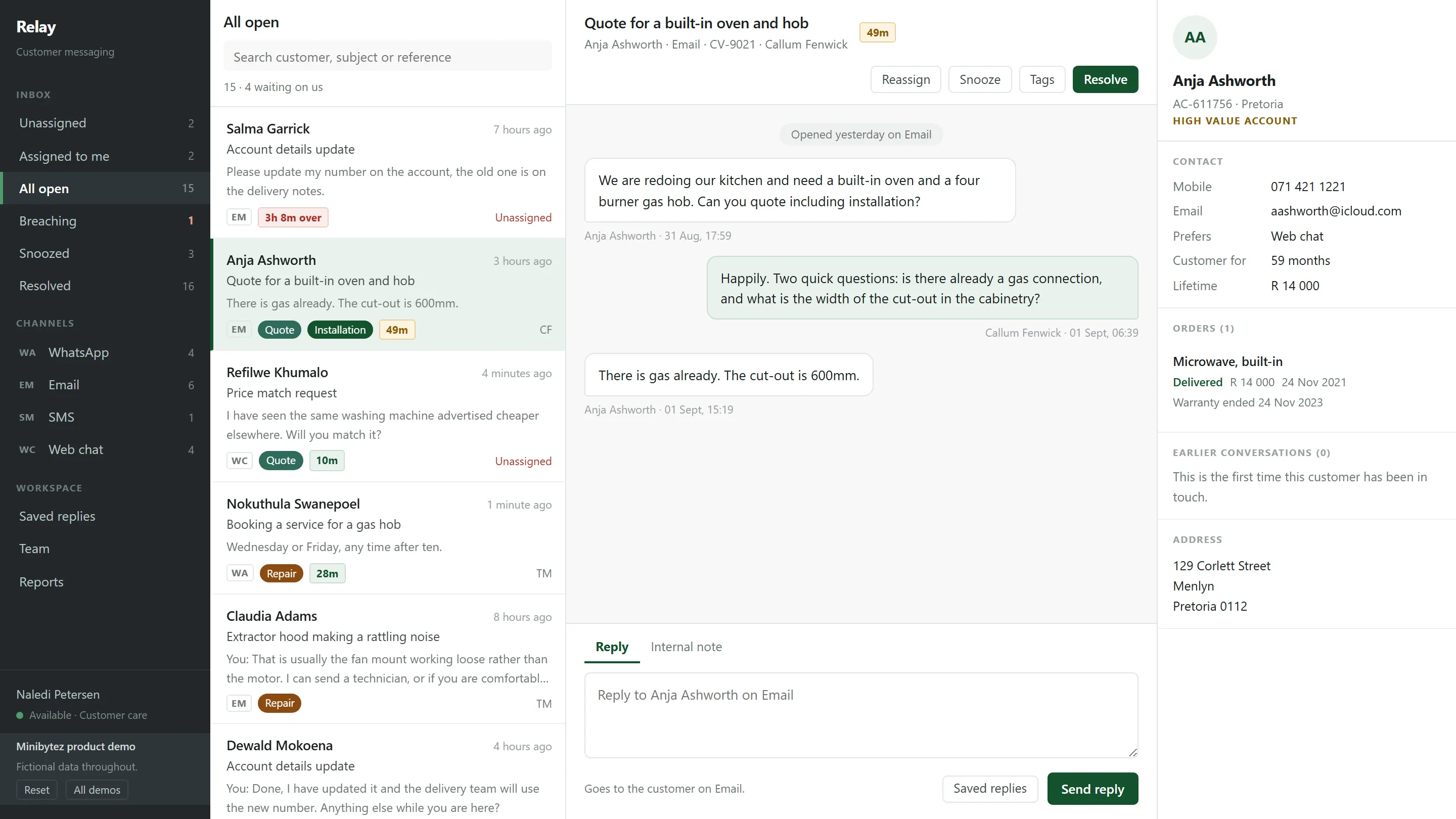
Relay
When conversations live on staff phones they leave when the staff do. The business needs to own the thread, and the person answering needs the customer context in the same screen.
- One inbox with WhatsApp, email, SMS and web chat in a single queue
- Assignment and ownership, with internal notes that stay internal
- Customer context beside the conversation rather than a tab away
- Saved replies and SLA state, so response time is managed and not hoped for
Executive reporting
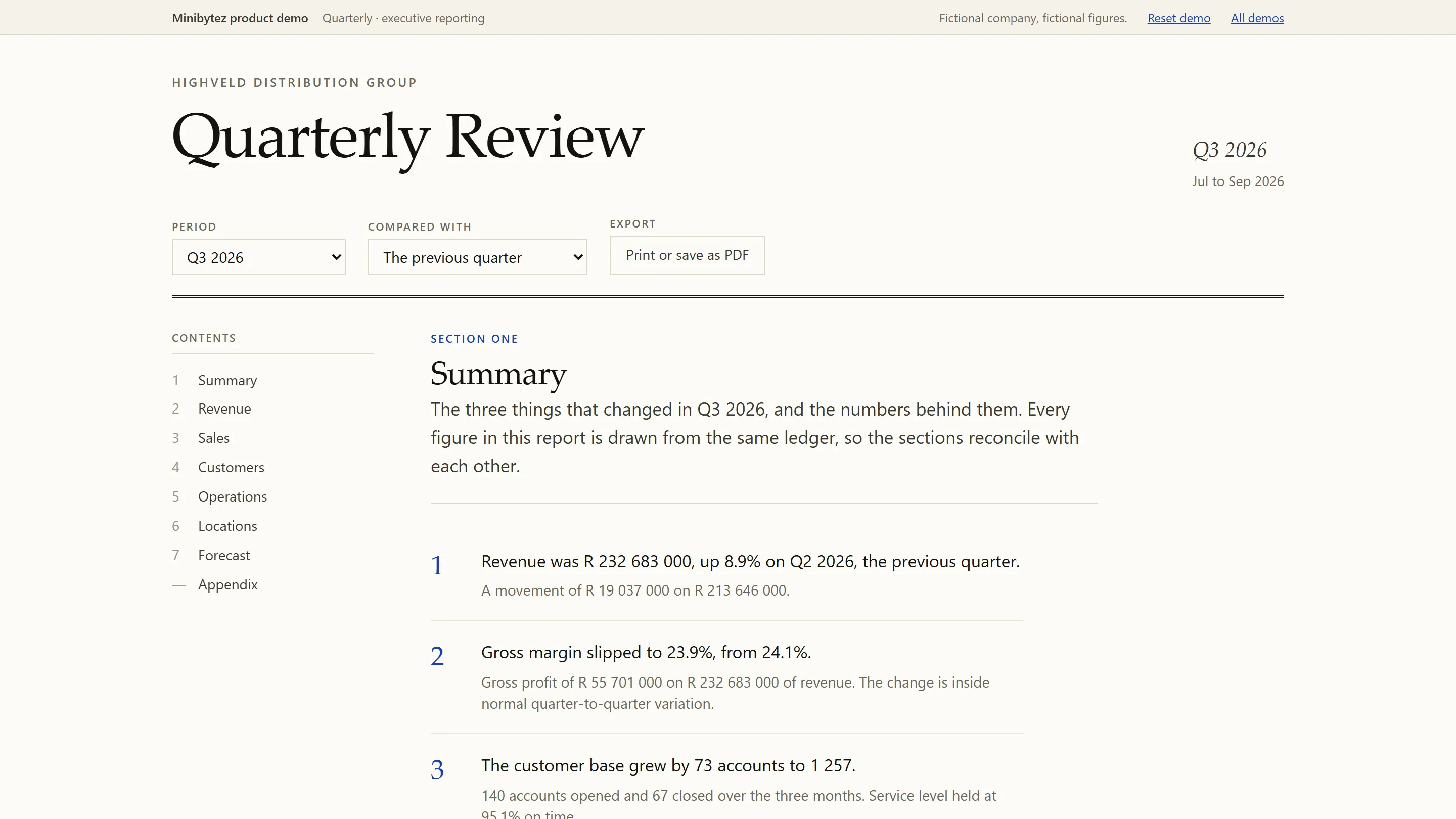
Quarterly
A wall of live tiles is not a management report. Leadership needs a period closed off, figures that agree with each other, and a document that survives being printed and taken into a meeting.
- A period review with a narrative, not a grid of unrelated metrics
- Figures that reconcile to one ledger rather than four sources
- Charts that state their finding instead of leaving the reader to guess
- Cohort and forecast views, and a layout that prints correctly
Access control and connected devices
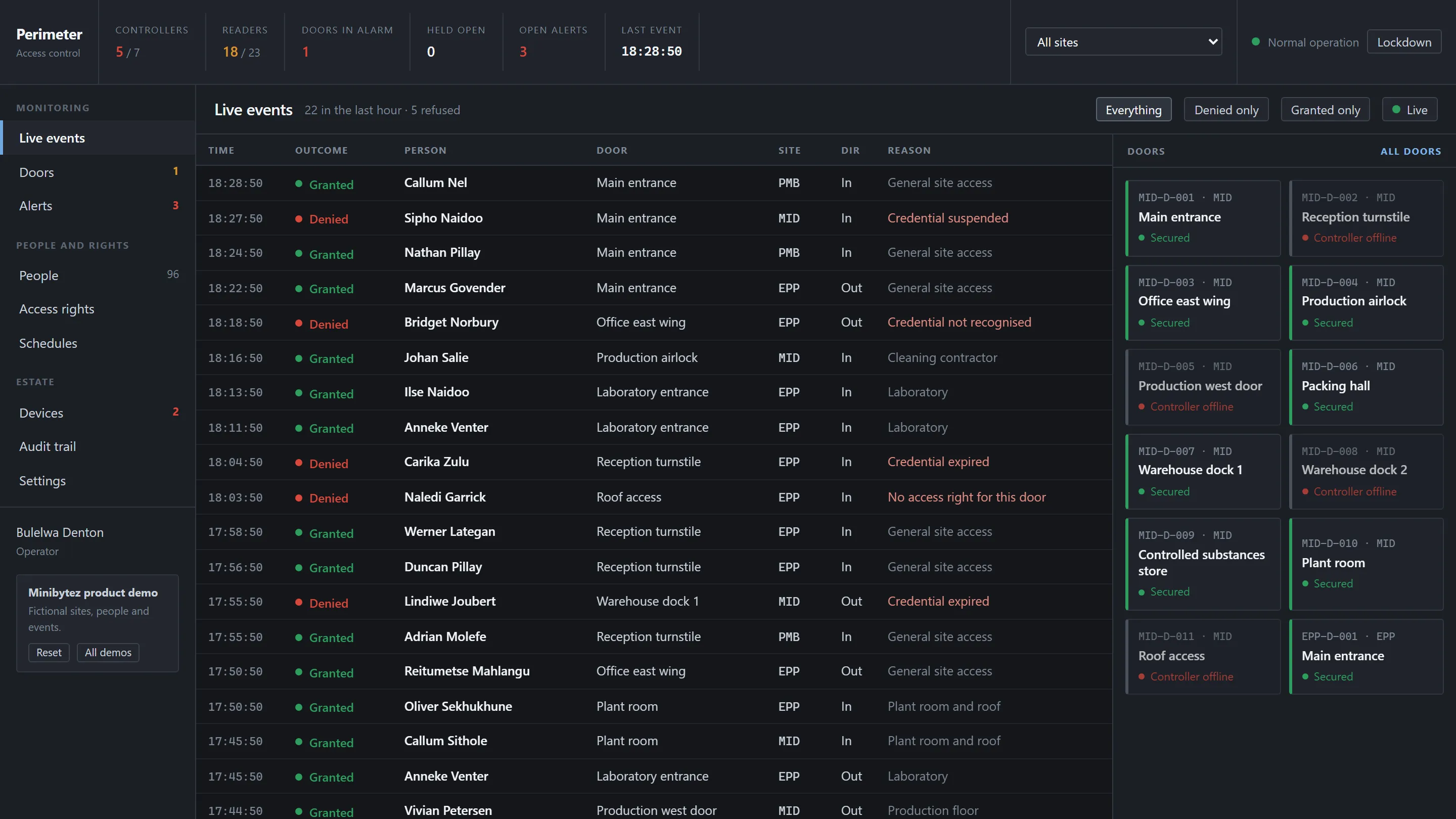
Perimeter
Access hardware fails quietly. The first sign is usually a queue at the door, and by then nobody can say whether the reader is offline or the entitlement was simply wrong.
- A live event stream showing each entry decision as it is evaluated
- Door state and control, with the reason a refusal was a refusal
- Credential issue and revoke driven from the person record
- Device health monitoring and an append-only audit trail
A demonstration is not your business.
Yours has its own rules, its own exceptions and its own systems that cannot be replaced. Tell us how it actually runs and we will tell you what we would build.